

A deep plane facelift looks more natural because it repositions the underlying structural tissues rather than pulling the skin. This approach restores the face to its original anatomical position, avoiding the tight, windblown appearance often associated with traditional skin-only lifts. By addressing the root cause of aging, the result appears as a refreshed version of the patient rather than a surgically altered stranger.
The Mechanics of Aging and Tissue Descent
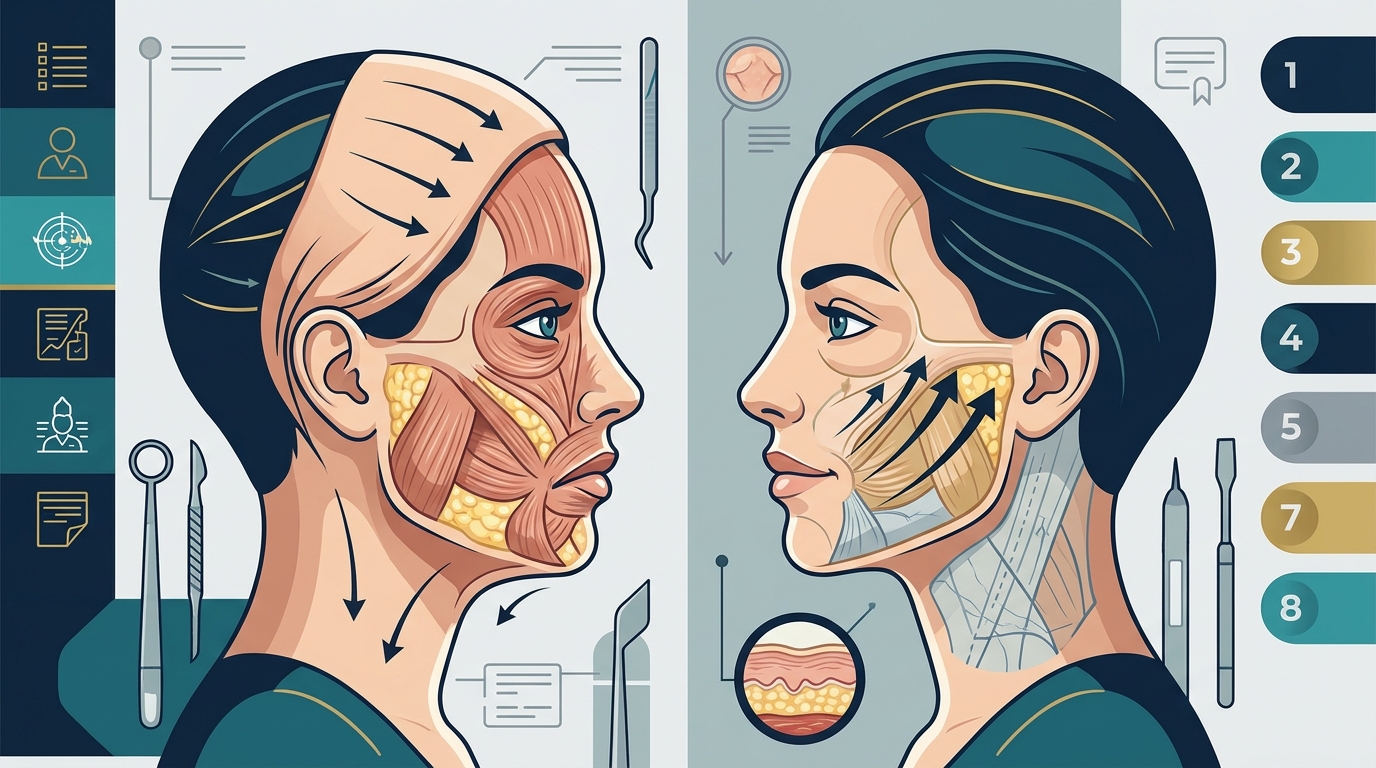
Traditional facelifts often focus on the epidermis and dermis, the outermost layers of the skin. While this can tighten the surface, it does not correct the underlying sagging. Imagine a tent where the poles have sunk into the ground; tightening the canvas (skin) without raising the poles (structure) results in a wrinkled, strained look. The deep plane technique addresses the poles first, allowing the skin to drape naturally over a restored framework.
Releasing Ligaments for Anatomical Restoration
The key to a natural result lies in the release of the facial ligaments. In a deep plane procedure, the surgeon carefully releases the ligaments that tether the aging tissues to the bone. This allows the surgeon to move the entire block of tissue, including the SMAS and deep fat, back to its youthful position. This is a significant departure from traditional methods, which often leave these ligaments intact or only partially address them.
At Ultimo Clinic, this technique is performed by dr. Enrina Diah, who pioneered the deep plane facelift in Indonesia in 2014. Her approach focuses on restoring the face to its pre-aging anatomy. By repositioning the tissues rather than just pulling them, the surgeon avoids the unnatural tension that can distort facial expressions. The result is a face that moves and expresses emotion naturally, because the underlying muscles and nerves are preserved in their correct anatomical alignment.
Preserving Facial Expression and Movement
One of the most common complaints about traditional facelifts is the loss of facial expression. Patients often report feeling like they cannot smile fully or that their face looks frozen. This occurs because the skin is pulled too tightly, restricting the movement of the underlying muscles. In contrast, a deep plane facelift preserves the natural dynamics of the face. Because the skin is not under tension, it moves freely with the muscles beneath it.
This preservation of movement is critical for a natural appearance. A face that looks young but cannot express joy or surprise will always appear artificial. The deep plane technique ensures that the patient's unique character and expressiveness remain intact. For patients seeking the best plastic surgeon for facial rejuvenation, the ability to maintain natural expression is a primary differentiator. It is the difference between looking ten years younger and looking like a different person entirely.
Long-Term Durability and Aesthetic Harmony
Furthermore, the deep plane approach allows for better harmony between the face and the neck. Aging affects the entire lower face and neck as a unit. A combined deep face and neck lift addresses both areas simultaneously, ensuring a smooth transition from the jawline to the neck. This holistic approach prevents the common issue of a lifted face sitting on an unlifted neck, which can look disjointed and unnatural. The goal is a cohesive, harmonious result that respects the patient's individual anatomy.
Choosing the Right Surgeon for Natural Outcomes
Not all facelifts are created equal, and the technique used by the surgeon is paramount. Patients should look for a surgeon who specializes in deep plane techniques and has a proven track record of natural-looking results. Experience matters, as the deep plane approach requires a deep understanding of facial anatomy and the ability to navigate complex tissue planes safely.
When evaluating a best plastic surgery clinic, consider the surgeon's philosophy. Do they prioritize structural restoration over skin tightening? Do they emphasize the preservation of facial expression? At Ultimo Clinic, the focus is on anatomy-driven surgery that delivers results that look like the patient, just refreshed. This philosophy ensures that the outcome is not just aesthetically pleasing but also functionally sound and naturally expressive.
Key Takeaways
- Structural Correction: Deep plane facelifts reposition deep tissues and fat pads, addressing the root cause of aging rather than just tightening skin.
- Ligament Release: Releasing facial ligaments allows for anatomical restoration, preventing the tight, pulled look of traditional lifts.
- Expression Preservation: By avoiding skin tension, deep plane techniques maintain natural facial movement and expression.
- Durability: Correcting the underlying structure leads to longer-lasting results compared to skin-only procedures.
- Harmony: The technique often includes the neck, ensuring a smooth, cohesive transition between the face and neck.
- Surgeon Expertise: Choosing a surgeon with specialized training in deep plane anatomy is critical for achieving natural outcomes.
Frequently Asked Questions
What is the main difference between a deep plane facelift and a traditional facelift?
The main difference is the layer of tissue addressed. Traditional facelifts primarily pull and tighten the skin, while deep plane facelifts reposition the underlying SMAS layer and deep fat pads. This structural approach leads to more natural and durable results.
Does a deep plane facelift change my facial expression?
No, a well-performed deep plane facelift should not change your facial expression. In fact, it often improves it by restoring the tissues to their natural positions, allowing for free and natural movement of the facial muscles.
How long do the results of a deep plane facelift last?
Results from a deep plane facelift are generally more durable than traditional lifts. While individual results vary, many patients enjoy the benefits for 10 to 15 years or longer, as the procedure addresses the structural causes of aging.
Is the deep plane facelift more complex than a traditional lift?
Yes, the deep plane facelift is a more complex procedure that requires advanced surgical skills and a deep understanding of facial anatomy. It involves releasing ligaments and repositioning deep tissue layers, which demands precision and expertise.
Who is a good candidate for a deep plane facelift?
Good candidates are individuals with significant jowling, cheek hollowing, and neck laxity who desire a natural-looking result. It is particularly suitable for those who have had previous skin-only lifts that did not provide satisfactory long-term results.
Can a deep plane facelift be combined with other procedures?
Yes, a deep plane facelift can be combined with other procedures such as blepharoplasty, brow lift, or fat transfer to address multiple signs of aging in a single surgery. This comprehensive approach ensures a harmonious and balanced result.