

The deep plane facelift is a structural surgical technique that repositions facial tissues at a deeper anatomical level, offering more natural and longer-lasting results than traditional skin-only lifts. This guide compares the two methods regarding complication rates, recovery timelines, aesthetic outcomes, and longevity. It serves as a comprehensive resource for patients evaluating modern facial rejuvenation options at a specialized clinic.
Complication Rates
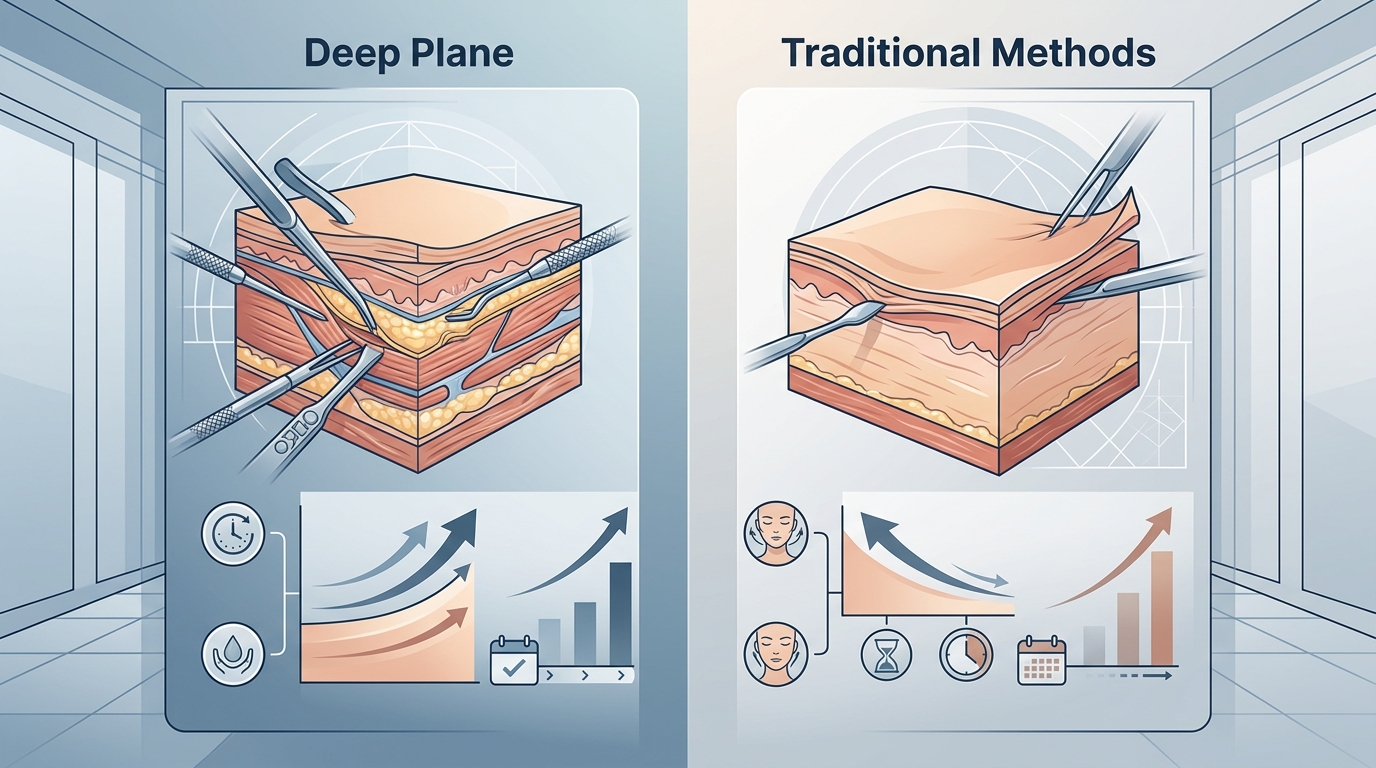
Understanding the safety profile of facial surgery is the first step in making an informed decision. Complication rates vary significantly based on the surgical technique and the surgeon's expertise. Traditional facelifts, often referred to as skin-only or SMAS (Superficial Musculoaponeurotic System) lifts, involve tightening the skin and underlying muscle layer. While effective for mild sagging, these techniques can sometimes lead to a stretched or windblown appearance if the skin is pulled too tightly. The deep plane facelift, pioneered in the 1990s and refined over the last two decades, works by releasing the deep ligaments that anchor the face to the skull. This allows for a more natural repositioning of the midface and lower face without excessive tension on the skin.
Neurological and Vascular Risks
One of the primary concerns in any facelift is the risk of nerve injury, particularly to the facial nerve branches that control expression. In traditional lifts, the dissection plane is often closer to the superficial nerve branches. In contrast, the deep plane technique requires a more extensive dissection in the deep subcutaneous tissue. This deeper approach allows the surgeon to visualize and protect the main trunk of the facial nerve more effectively. Studies have shown that while the deep plane facelift is a more complex procedure, the rate of permanent nerve injury is comparable to or lower than that of traditional techniques when performed by experienced surgeons. The key factor is not just the technique, but the surgeon's familiarity with the deep anatomical planes.
Infection and Hematoma
Hematoma, or the collection of blood under the skin, is the most common complication in facelift surgery. It occurs in a small percentage of cases and is usually managed with drainage. The deep plane facelift involves a larger area of dissection, which theoretically could increase the risk of bleeding. However, meticulous hemostasis (stopping the bleeding) during the procedure is critical. At Ultimo Clinic, the surgical team emphasizes precise hemostasis and the use of drains to minimize this risk. Infection rates remain low in both techniques, typically less than 1%, provided that strict sterile protocols are followed. The choice of technique should not be driven by fear of complications alone, but by the specific anatomical needs of the patient.
Recovery Timeline
Recovery is a significant consideration for many patients, especially those with busy professional or personal schedules. The recovery period for a deep plane facelift is generally similar to that of a traditional facelift, though the nature of the swelling may differ. Patients can expect significant swelling and bruising in the first 7 to 10 days. This is the most visible phase of recovery, during which the face may appear puffy and discolored. Most patients return to work after 10 to 14 days, depending on the nature of their job and their comfort level. The deep plane technique, because it involves deeper dissection, can sometimes result in slightly more initial swelling compared to a minimal skin-only lift. However, this swelling resolves more predictably, leading to a smoother final result.
First Two Weeks
In the first week, patients are advised to keep their head elevated, even while sleeping, to reduce swelling. Ice packs can be applied to the face and neck to minimize bruising. Pain is usually manageable with prescribed medication. By the end of the first week, the worst of the bruising begins to fade. Sutures are typically removed between days 5 and 10. During this period, patients should avoid strenuous activities, heavy lifting, and bending over. The deep plane facelift requires a period of rest to allow the tissues to settle into their new position. This initial phase is crucial for the final outcome, as the tissues need time to heal in their repositioned state.
Long-Term Healing
Facelift Aesthetic Results
The aesthetic outcome is the primary goal of any facelift. Traditional skin-only lifts often result in a tight, pulled look, particularly around the mouth and ears. This is because the skin is stretched over the underlying structures without addressing the sagging of the deeper tissues. The deep plane facelift, on the other hand, aims for a natural, refreshed appearance. By releasing the deep ligaments and repositioning the midface and lower face, the technique restores volume and contour without distorting facial features. The result is a face that looks younger but still like the patient. This is often described as the "no-surgery" look, where the patient appears well-rested rather than surgically altered.
Midface and Cheek Contour
One of the most significant advantages of the deep plane facelift is its ability to address midface sagging. Traditional lifts often leave the cheeks looking flat or deflated. The deep plane technique lifts the cheek fat pads and the lower eyelid area, restoring fullness and projection to the midface. This is particularly important for Asian patients, who may have different facial bone structures and fat distribution patterns. At Ultimo Clinic, the surgeons tailor the deep plane technique to the individual's anatomy, ensuring that the midface is lifted in a way that harmonizes with the rest of the face. The result is a more balanced and youthful facial profile.
Neck and Jawline Definition
The deep plane facelift also excels in defining the jawline and neck. By addressing the platysma muscle and the deep neck tissues, the technique can create a sharper jawline and smoother neck contour. Traditional lifts often struggle with neck laxity, leading to a less defined jawline. The deep plane approach allows for a more comprehensive rejuvenation of the lower face and neck. This is particularly beneficial for patients with significant neck sagging or a double chin. The combination of midface lift and neck tightening results in a harmonious and natural-looking rejuvenation. The deep plane facelift is considered the gold standard for achieving these aesthetic goals.
Facelift Longevity Comparison
Longevity is a critical factor when comparing facelift techniques. Traditional skin-only lifts tend to have a shorter duration of effect. Because the skin is tightened but the underlying tissues remain sagging, the skin eventually stretches again, leading to a recurrence of sagging. This can happen within 5 to 7 years. The deep plane facelift, by repositioning the deeper tissues, provides a more durable result. The repositioned tissues are anchored in a new position, which helps to maintain the lift over time. Studies suggest that the results of a deep plane facelift can last 10 to 15 years or longer. This is because the technique addresses the root cause of aging, which is the descent of the deep facial tissues, rather than just the surface symptoms.
Structural Integrity
The structural integrity of the face is better preserved with the deep plane technique. By working at the deep plane, the surgeon can release the ligaments that have stretched with age. This allows the tissues to be repositioned in a way that is anatomically correct. The traditional technique, by contrast, often relies on sutures to hold the skin in place, which can lead to tension and distortion over time. The deep plane approach creates a more stable foundation for the face, reducing the likelihood of recurrence. This structural approach is why the deep plane facelift is preferred by many surgeons and patients seeking long-term results.
Impact on Future Aging
The deep plane facelift also has a positive impact on future aging. By repositioning the tissues, the technique helps to slow down the visible signs of aging in the treated areas. The face continues to age, but the repositioned tissues age more gracefully. This is in contrast to traditional lifts, where the skin may continue to sag despite the initial tightening. The deep plane approach provides a more comprehensive rejuvenation that stands the test of time. Patients often report that their results look natural and age well, without the need for early revision surgery.
Results Longevity Comparison
| Feature | Traditional Facelift | Deep Plane Facelift |
|---|---|---|
| Technique | Skin-only or SMAS lift | Deep ligament release and repositioning |
| Aesthetic Result | Tight, sometimes pulled look | Natural, refreshed appearance |
| Midface Lift | Limited | Significant |
| Neck Contour | Moderate | Excellent |
| Longevity | 5-7 years | 10-15+ years |
| Recovery Time | 10-14 days | 10-14 days |
| Complexity | Moderate | High |
Key Takeaways
- The deep plane facelift is a structural technique that repositions deep facial tissues for natural results.
- Traditional skin-only lifts may result in a tighter, less natural appearance with shorter longevity.
- Complication rates are comparable for both techniques when performed by experienced surgeons.
- Recovery timelines are similar, with significant swelling in the first two weeks.
- Deep plane facelifts offer superior midface and neck contouring.
- Longevity of deep plane results is typically 10 to 15 years or more.
- The choice of technique depends on the patient's anatomy and aesthetic goals.
- Consultation with a specialist is essential to determine the best approach.
Frequently Asked Questions
Is the deep plane facelift more painful than a traditional facelift?
Pain levels are similar for both techniques. The deep plane facelift involves a larger area of dissection, which may lead to slightly more initial swelling, but pain is usually well-managed with medication. Most patients report that the discomfort is manageable and subsides within a few days.
How long do the results of a deep plane facelift last?
The results of a deep plane facelift can last 10 to 15 years or longer. This is because the technique repositions the deep tissues, providing a more stable and durable lift compared to traditional skin-only lifts.
Who is a good candidate for a deep plane facelift?
Good candidates are individuals with moderate to severe facial sagging, particularly in the midface and lower face. Patients with significant neck laxity or a desire for a natural, long-lasting result are ideal candidates. A consultation with a surgeon is necessary to determine suitability.
Can the deep plane facelift be combined with other procedures?
Yes, the deep plane facelift can be combined with other procedures such as blepharoplasty, rhinoplasty, or fat transfer. This allows for a comprehensive facial rejuvenation in a single surgery. The combination of procedures should be planned carefully to ensure optimal results.
What is the difference between a deep plane facelift and a SMAS lift?
A SMAS lift involves tightening the superficial musculoaponeurotic system, while a deep plane facelift involves releasing the deep ligaments and repositioning the tissues. The deep plane technique offers a more comprehensive lift of the midface and lower face, resulting in a more natural appearance.
How does the deep plane facelift affect facial expressions?
The deep plane facelift is designed to preserve facial expressions. By repositioning the tissues without excessive tension on the skin, the technique allows for natural movement and expression. Patients often report that their faces look younger but still express emotions naturally.
Is the deep plane facelift suitable for Asian patients?
What is the cost difference between the two techniques?
The deep plane facelift is generally more expensive than a traditional facelift due to its complexity and the higher level of surgical skill required. The cost varies depending on the surgeon, location, and specific procedures included. A consultation is necessary to obtain an accurate quote.