

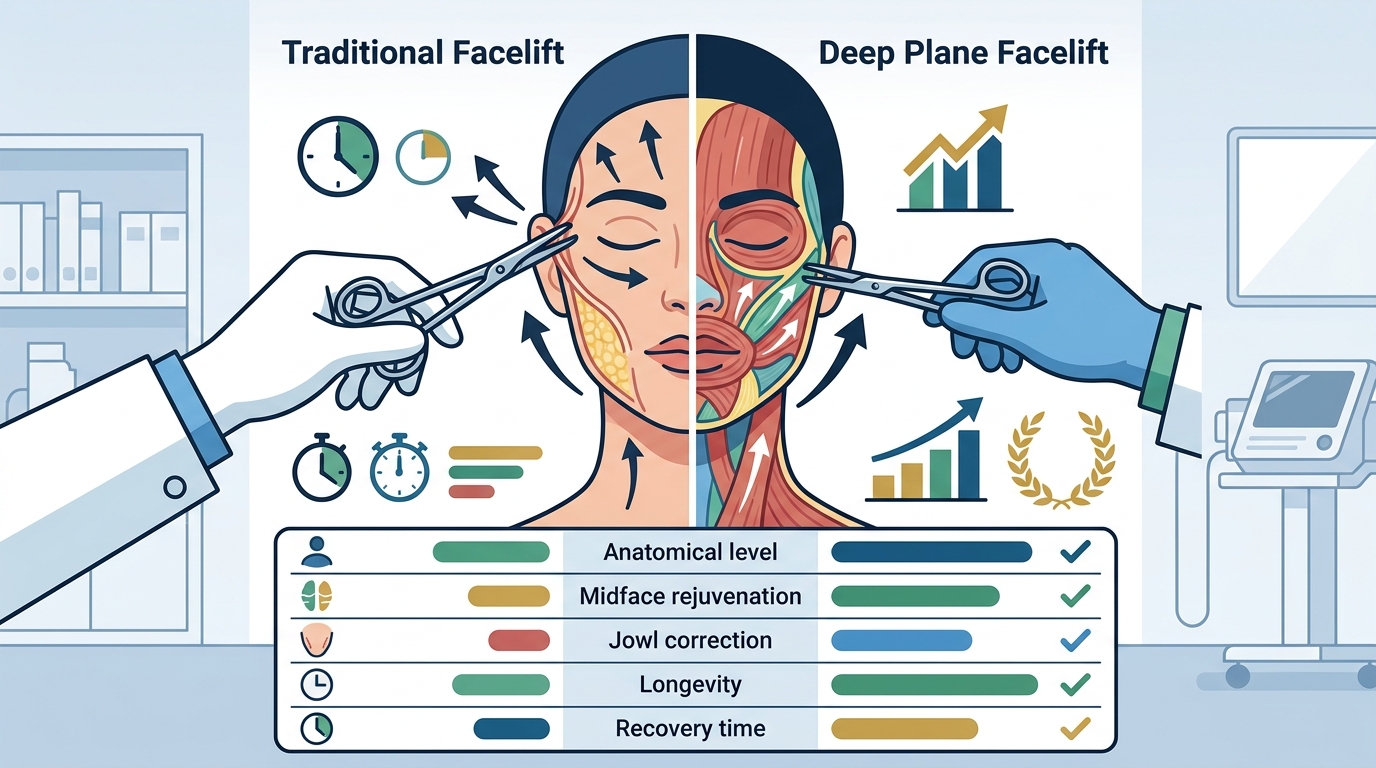
The deep plane facelift offers superior midface rejuvenation and longer-lasting results compared to traditional skin-pull methods, though it requires a slightly longer initial recovery period. This guide examines the anatomical differences, longevity, and safety profiles of both techniques to help you make an informed decision for your facial rejuvenation journey.
Facelift Longevity
By working at the foundation rather than the surface, the deep plane technique produces results that last significantly longer. Clinical data suggests that deep plane facelifts can maintain their aesthetic benefits for 10 to 15 years. This extended durability is because the procedure corrects the root cause of aging: the descent of deep facial tissues. At Ultimo Clinic, our surgeons emphasize that investing in a structural lift provides a more natural, long-term solution than repeated surface-level corrections.
Why Structure Matters
Facial aging is not just about loose skin; it is about the shifting of fat pads and the weakening of ligaments. When these deep structures are repositioned, the skin drapes naturally over the new foundation. This approach prevents the "windblown" or pulled look often associated with aggressive traditional techniques. The result is a face that looks refreshed and younger, but still distinctly like the patient.
Recovery Timeline
Recovery is a critical factor for many patients. The deep plane facelift involves more extensive dissection than a traditional facelift, which can lead to a slightly longer initial healing phase. Most patients experience significant swelling and bruising for the first 10 to 14 days. However, the nature of the swelling is different. In deep plane procedures, the swelling is often deeper and more diffuse, whereas traditional facelifts may present with more superficial, localized bruising.
Patients can typically return to work and social activities within 2 to 3 weeks, provided they avoid strenuous exercise and direct sun exposure. The final results continue to refine over the following 6 to 12 months as the tissues settle. It is important to note that while the initial recovery may feel more intense, the long-term stability of the results often outweighs the short-term discomfort. Proper post-operative care, including the use of SPF 50 and retinol after the skin has healed, is essential to protect the investment.
Managing Swelling and Bruising
To minimize recovery time, surgeons often recommend cold compresses for the first 48 hours, followed by gentle elevation of the head. Avoiding salty foods and alcohol during the first week can also help reduce fluid retention. While bruising is normal, it is temporary and fades as the blood vessels heal. Patients should follow their surgeon's specific instructions regarding wound care and medication to ensure a smooth healing process.
Midface Rejuvenation
The midface is the area where the deep plane facelift excels most dramatically. Traditional facelifts often struggle to lift the midface effectively without creating unnatural tension in the lower face. This is because the midface tissues are anchored by strong ligaments that do not release easily during a standard skin-pull. The deep plane technique, however, allows the surgeon to release these ligaments and reposition the malar fat pad and buccal fat pad to their original, youthful positions.
This repositioning restores volume and projection to the cheeks, which naturally flatten and descend with age. The result is a more defined cheekbone and a smoother transition from the cheek to the jawline. For patients with significant midface sagging, the deep plane facelift is often the only surgical option that can provide a truly natural and harmonious result. It addresses the hollowing under the eyes and the deepening of the nasolabial folds by supporting the tissues from below, rather than just pulling the skin over them.
Addressing Volume Loss
While the deep plane facelift repositions existing fat, it does not add new volume. For patients with significant volume loss, the surgeon may recommend combining the facelift with fat transfer or fillers. This combination approach ensures that the lifted tissues have adequate support, preventing a gaunt appearance. The goal is to restore the face's natural architecture, creating a balanced and youthful profile.
Complication Rates
Safety is a paramount concern for any surgical procedure. Both deep plane and traditional facelifts are generally safe when performed by experienced, board-certified surgeons. However, the complication profiles differ slightly. Traditional facelifts carry a higher risk of visible scarring and a "pulled" appearance if the skin is tensioned too tightly. Deep plane facelifts, while more complex, have a lower risk of these aesthetic complications because the skin is not under tension.
One of the most significant risks in any facelift is nerve injury, particularly to the facial nerve. A systematic review of nerve injury rates after facelift surgeries indicates that while rare, these complications can occur in both techniques. The deep plane approach requires precise knowledge of the craniofacial anatomy to avoid damaging the nerve branches. At Ultimo Clinic, our surgeons, including dr. Enrina Diah, Sp.BP-RE, KKF, are trained in advanced craniofacial surgery, ensuring that these risks are minimized through meticulous technique and anatomical expertise.
Choosing the Right Surgeon
The skill and experience of the surgeon are the most important factors in determining safety and outcomes. A deep plane facelift is a specialized procedure that requires specific training and a high volume of cases. Patients should seek out surgeons who have dedicated their practice to facial rejuvenation and who can demonstrate a portfolio of successful deep plane results. Choosing a surgeon with expertise in complex cases, such as those with prior nerve issues or significant structural changes, is crucial for a safe and successful outcome.
Key Takeaways
- Deep plane facelifts offer longer-lasting results (10-15 years) compared to traditional facelifts (5-7 years).
- Recovery for deep plane facelifts is slightly longer initially but leads to more stable long-term outcomes.
- The midface is best rejuvenated with a deep plane approach due to its ability to reposition deep fat pads.
- Traditional facelifts may result in a "pulled" look if skin tension is too high.
- Deep plane facelifts require a surgeon with specialized training in craniofacial anatomy.
- Combining deep plane facelifts with fat transfer can address volume loss for a more natural result.
- Proper post-operative care, including sun protection, is essential for maintaining results.
- Choosing an experienced surgeon is the most critical factor in minimizing complication risks.
Frequently Asked Questions
Is a deep plane facelift more painful than a traditional facelift?
Pain is typically well-managed with medication in both procedures. The deep plane facelift may involve more initial swelling, but most patients report that the discomfort is manageable and subsides within the first week.
How long do the results of a deep plane facelift last?
Results from a deep plane facelift can last 10 to 15 years, significantly longer than the 5 to 7 years typical of traditional skin-pull facelifts.
Can a deep plane facelift be combined with other procedures?
Yes, it is often combined with blepharoplasty, brow lift, or fat transfer to address multiple areas of aging in a single surgery.
Who is the best candidate for a deep plane facelift?
Patients with significant midface sagging, deep nasolabial folds, and loss of cheek volume are ideal candidates for a deep plane facelift.
What is the main difference between SMAS and deep plane facelifts?
SMAS facelifts plicate the SMAS layer, while deep plane facelifts release the retaining ligaments and reposition the deep fat compartments as a unit.
How can I find a qualified deep plane facelift surgeon in Jakarta?
Look for a board-certified plastic surgeon with specific training in deep plane techniques and a strong portfolio of results. Ultimo Clinic offers this specialized care in Jakarta.